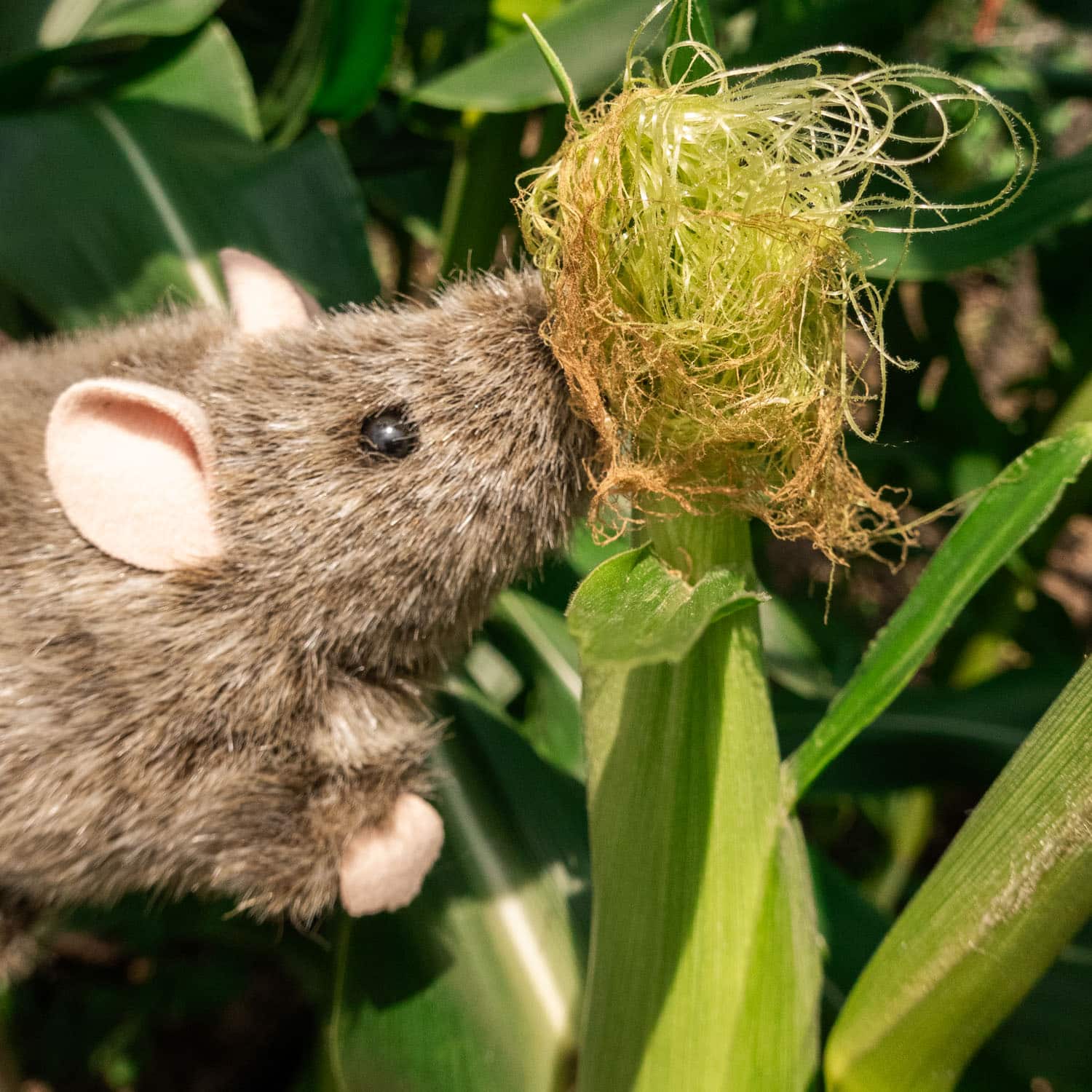
There’s nothing quite as satisfying as watching your corn stalks grow tall in a vibrant NYC garden, their tassels swaying gently in the urban breeze. That is, until the morning you step out to find your beautiful ears of corn savagely decimated, gnawed down to nubs. For many urban gardeners, this devastating scene is all too familiar, a grim testament to the persistent and formidable foe known as the city rat.
Here in New York City, our battle against garden rats is legendary. They’re resourceful, intelligent, and seemingly everywhere. Last season, countless gardeners watched their corn crops vanish overnight, a heartbreaking loss after months of dedicated care. The frustration is real, the disappointment palpable. But despair not! After extensive research and plenty of trial-and-error, we've compiled a comprehensive guide on how to protect corn from rats, offering ten robust strategies to help you reclaim your harvest and outsmart these unwelcome visitors.
Understanding the Urban Rat Challenge: Why Your Corn is a Prime Target
Before diving into solutions, it's crucial to understand why rats are such a problem, especially in a dense environment like NYC. Urban rats, primarily the Norway rat (Rattus norvegicus), are masters of survival. They thrive in close proximity to humans, finding abundant food, water, and shelter in our streets, buildings, and unfortunately, our gardens. Your sweet corn, with its sugary kernels, represents an irresistible delicacy—a high-energy jackpot that can fuel a rat colony for days.
The sheer number of rats in cities means that if one discovers your corn patch, it won't be long before others follow. They are creatures of habit and will exploit any reliable food source. Furthermore, their nocturnal nature often means the damage is done under the cover of darkness, leaving you to discover the carnage in the morning. A multi-pronged approach is almost always necessary to deter these persistent pests.
Proactive Measures: Cutting Off the Rodent Buffet (Beyond Just Your Corn)
While direct defenses for your corn are essential, true rodent control starts with good garden hygiene and general pest management. Rodents are always on the lookout for an easy meal, and your corn might just be one item on a larger menu. By cutting off other accessible food sources, you make your garden less attractive overall, reducing the rat population’s motivation to linger.
- Secure Trash Cans: Use heavy-duty, lidded garbage cans and secure them tightly. Avoid leaving trash bags out overnight if possible.
- Clean Up Fallen Fruit & Seeds: If you have fruit trees or berry bushes, collect fallen produce promptly. Bird feeders, while lovely, can also be major rat attractants due to spilled seeds. Consider feeders with catch trays or remove them if rats become a significant problem.
- Store Pet Food Safely: Pet food left outdoors, even for a short period, is an open invitation for rats. Store all pet food in sealed, rodent-proof containers indoors.
- Eliminate Water Sources: Fix leaky outdoor faucets and ensure pet water bowls are brought in overnight. Even small puddles can provide essential hydration for rodents.
- Reduce Hiding Spots: Keep your garden tidy. Remove piles of wood, debris, thick ground cover, and anything that could serve as shelter for rats. Trim back dense vegetation around the perimeter of your garden.
Direct Defenses: 10 Tested Strategies for How to Protect Corn From Rats
Once you’ve addressed the general environment, it's time to focus on direct protection for your precious corn. These methods range from simple DIY fixes to more robust installations, allowing you to choose what best fits your garden's size, budget, and your personal comfort level. For an even deeper dive into these strategies, be sure to check out From Socks to Fences: 10 Ways to Keep Rats Off Your Corn.
1. The Sock Method
Believe it or not, a simple cotton sock can be a surprisingly effective deterrent. Once your corn ears begin to swell and near full size, simply pull a clean sock over each ear. The idea is that rats find the cotton fibers difficult and annoying to gnaw through. They prefer a quick meal, and the added effort often sends them searching for an easier target. You'll need a lot of socks, so start collecting from family and friends! This method is relatively inexpensive and chemical-free, making it a great organic option for protecting individual ears.
2. Plastic Bottle Barriers
Similar to the sock method, plastic water bottles offer a slick, hard-to-grip barrier. Collect empty plastic water or soda bottles, cut off the top quarter, and slide the remaining bottom portion over each developing ear of corn. Ensure the fit is snug around the stalk to prevent rats from simply knocking it off or squeezing underneath. This method reuses plastic, making it environmentally friendly, and provides a physical barrier that most rats find frustrating to overcome.
3. Corn Cages
For smaller corn patches or particularly prized stalks, individual cages can be incredibly effective. This involves creating a small enclosure around each corn stalk using hardware cloth or chicken wire with holes small enough to prevent rats from squeezing through (1/2 inch is ideal). While more time-consuming and potentially expensive, especially for a large harvest, a well-constructed cage offers robust, long-term protection. Digging the cage slightly into the ground can also prevent burrowing rats from gaining access. If you're serious about safeguarding your crop, explore Defeat Garden Rats: Tested Strategies to Save Your Corn Crop for more advanced cage designs.
4. Rodent Repellent Sprays
Certain commercial or homemade sprays can deter rats through scent or taste. Look for natural repellents containing ingredients like peppermint oil, cayenne pepper, or capsaicin, which rats find irritating. Apply these sprays to the ground around your corn stalks and directly on the husks. Be mindful of reapplication, especially after rain, and always choose products safe for use around edible plants and pets. While not always a foolproof solution, repellents can add an extra layer of defense by making your garden less appealing.
5. Full Fencing or Enclosures
If you're dealing with a persistent rat problem and have a dedicated corn patch, a full fence might be necessary. This isn't just any fence; it needs to be rat-proof. Use hardware cloth (1/2 inch mesh) rather than chicken wire, as rats can squeeze through larger holes. The fence should be at least 2-3 feet high, and crucially, extend at least 6-12 inches *below* ground level to prevent burrowing. For climbing rats, consider adding an outward-angled overhang at the top or even covering the entire top of the enclosure with netting or hardware cloth to create a fully sealed "corn fortress."
6. Trapping Strategies
For direct intervention, traps can be an effective way to reduce the local rat population. There are various types: snap traps (lethal), live traps (requiring relocation, which can be challenging in urban environments), and electronic traps. If choosing lethal traps, always place them strategically along known rat pathways (often along walls or fences), away from pets and children. Bait with high-protein foods like peanut butter, bacon, or even small pieces of corn kernel. Regular monitoring and resetting are key for success.
7. Enlisting Feline Friends
Cats are natural predators of rats and can be incredibly effective deterrents. If you have an outdoor cat or a friendly neighborhood feline, encouraging their presence in your garden can significantly reduce rodent activity. A well-fed cat that feels safe and welcome (perhaps with a chin rub or an occasional treat) will often patrol its territory, and even its scent can be enough to scare rats away. This is a long-term, low-maintenance solution that many urban gardeners swear by.
8. Owl Decoys and Feathers
Owls are another natural predator of rats. While attracting a live owl to a busy NYC garden might be challenging, visual deterrents can still work. Placing realistic owl decoys strategically around your corn patch can instill fear in rats. For maximum effectiveness, move the decoys every few days to prevent rats from realizing they're not real. Some gardeners also report success with scattering real owl feathers around the garden, using the predator's scent as a warning.
9. Ultrasonic and Noise Repellents
Ultrasonic devices emit high-frequency sound waves that are supposed to be irritating to rodents, driving them away. While results vary, some gardeners report success. Place these devices strategically around your corn patch, ensuring they have an unobstructed path for the sound waves. Solar-powered versions are convenient for outdoor use. Combining them with other methods might increase their efficacy, as rats can sometimes habituate to consistent sounds.
10. Embrace Adaptability (and Hope for the Best!)
Ultimately, gardening is an ongoing learning process, especially in a challenging environment like NYC. Despite all your efforts, rats are incredibly tenacious. Sometimes, despite every defense, a clever rat might still get through. Don't let this discourage you. The key is to remain vigilant, adapt your strategies, and learn from each season. Experiment with different combinations of the methods above. Cross your fingers, monitor your garden diligently, and celebrate every ear of corn you manage to harvest. The battle against urban rats is tough, but with persistence and the right strategies, you can significantly improve your chances of a successful corn crop.
Protecting your corn from rats in an urban environment requires a combination of vigilance, prevention, and proactive defense. By implementing these strategies, you're not just fighting rats; you're taking control of your garden and safeguarding your hard-earned harvest. May your corn be tall, sweet, and rat-free!
